
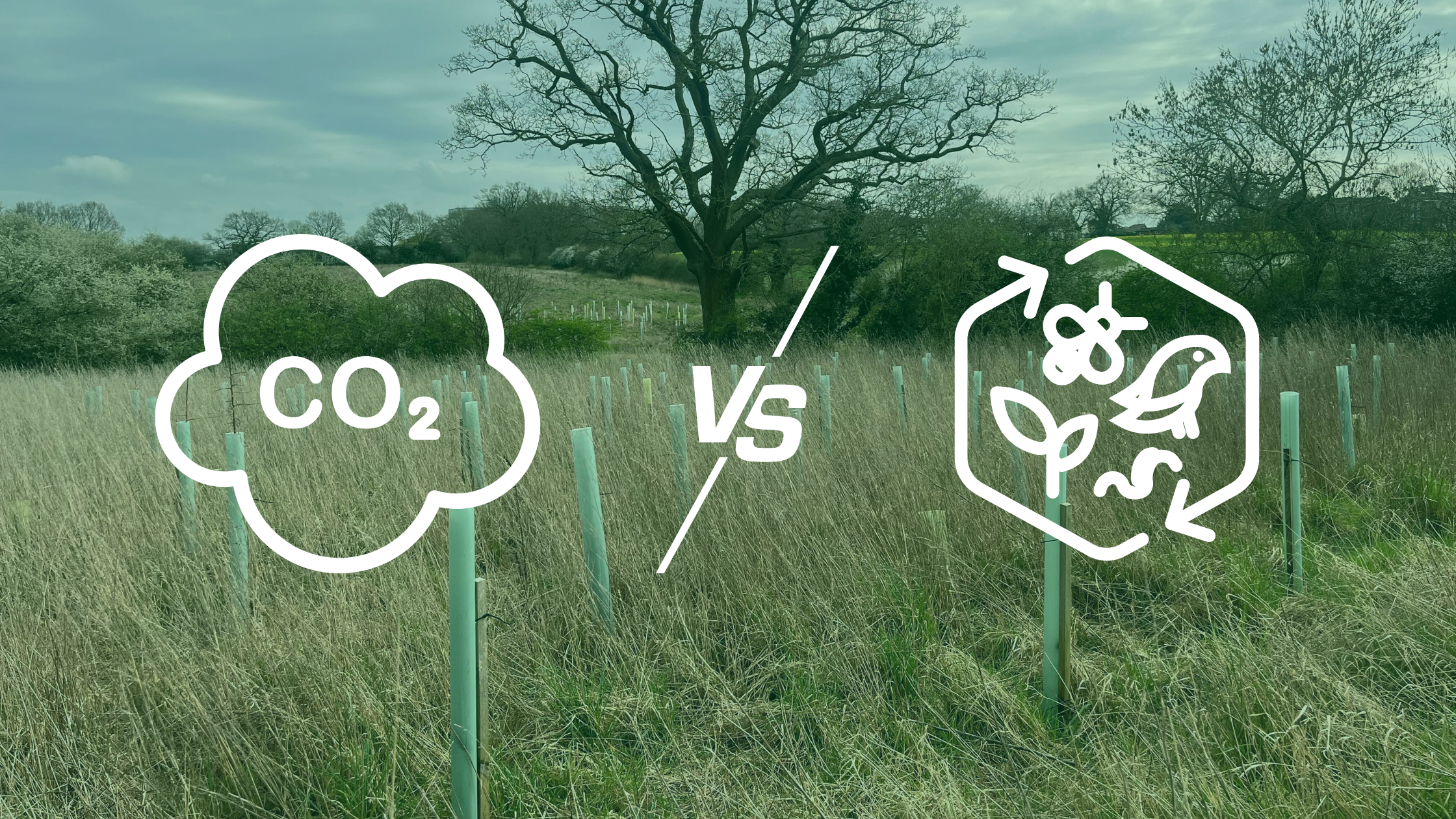
Carbon removals vs Biodiversity credits: what’s the difference and why does it matter?
When we talk about CO2 offsetting or corporate climate action, the conversation often centres on carbon credits. However, in recent years, another key concept has gained traction: biodiversity credits.
While both share the same overarching goal—preserving the environment and serving as a financing mechanism for sustainability projects—they differ in several ways, particularly in their units of measurement, structure, and functions.
Carbon Credits
Carbon credits make it possible to “remove” or “avoid” carbon emissions, commonly measured in tons of CO2 equivalent. They are used by companies to offset their greenhouse gas (GHG) emissions generated by business activities.
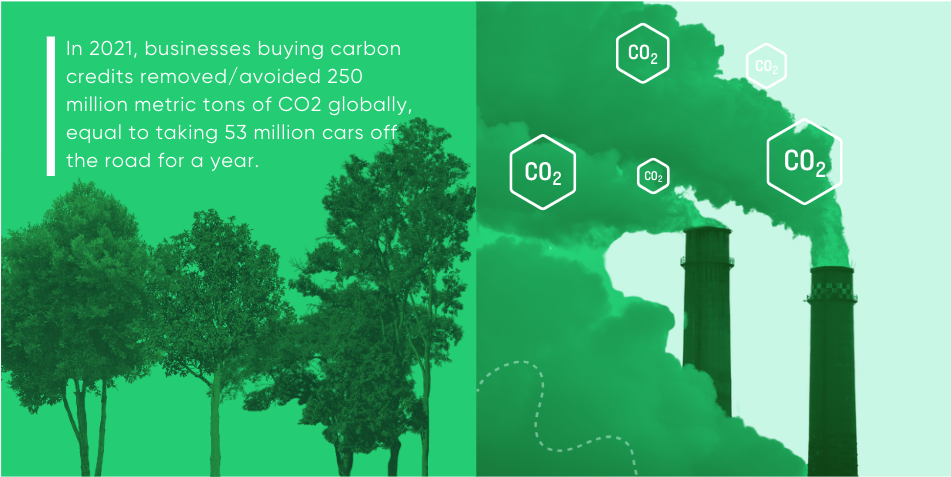
Depending on the source of emissions, there are two main types of carbon credits:
Carbon removal credits: generated by projects that capture and sequester CO2, such as reforestation or afforestation.
Avoidance credits: linked to projects that prevent emissions, such as forest and land conservation or renewable energy projects that replace fossil fuels.
At Life Terra, we exclusively work with carbon removal credits, generated through professional tree-planting projects designed for long-term carbon sequestration.
Biodiversity Credits
Biodiversity credits, on the other hand, are more complex. These measure the preservation and enhancement of biodiversity within ecosystems, which makes it difficult to establish a universal unit of measurement, given the more abstract and intangible nature of biodiversity.
They are generated through nature conservation projects, such as: protecting native flora and fauna, restoring degraded ecosystems or safeguarding endangered species. The unit of measurement depends on the purpose of each project and may include:
Habitat restored
Increase in species diversity
Improvement of ecosystem integrity
This emerging tool brings value to critical aspects of the environment that are often overlooked in carbon offsetting schemes, such as ecosystem health, climate resilience, and global biodiversity protection.
Why Are They Important?
Both carbon credits and biodiversity credits are nature-based solutions (NbS) that offer benefits beyond their primary purpose of mitigating emissions and preserving the environment.
Together, they can:
Enhance ecosystem services (clean water, healthy soils, food production, pollination).
Strengthen the livelihoods and development of rural communities.
Create resilient environments that are better adapted to climate change.
What Do They Mean for Businesses?
The climate crisis is deeply connected to the biodiversity crisis. A carbon credit project that does not account for its broader environmental context may unintentionally cause long-term harm to ecosystems.
For companies, the choice now goes beyond carbon offsetting. Supporting both mechanisms allows for a holistic approach to sustainability, which combines:
Reducing CO2 emissions
Investing in the restoration of resilient, climate-adapted ecosystems
At Life Terra, we believe in solutions that address both challenges simultaneously. Through our reforestation, ecological restoration, and agroforestry projects, we capture and store carbon while restoring ecosystems, fostering biodiversity and engaging local communities in climate action and environmental stewardship.