CERTH workshop: The power of forests in carbon sequestration
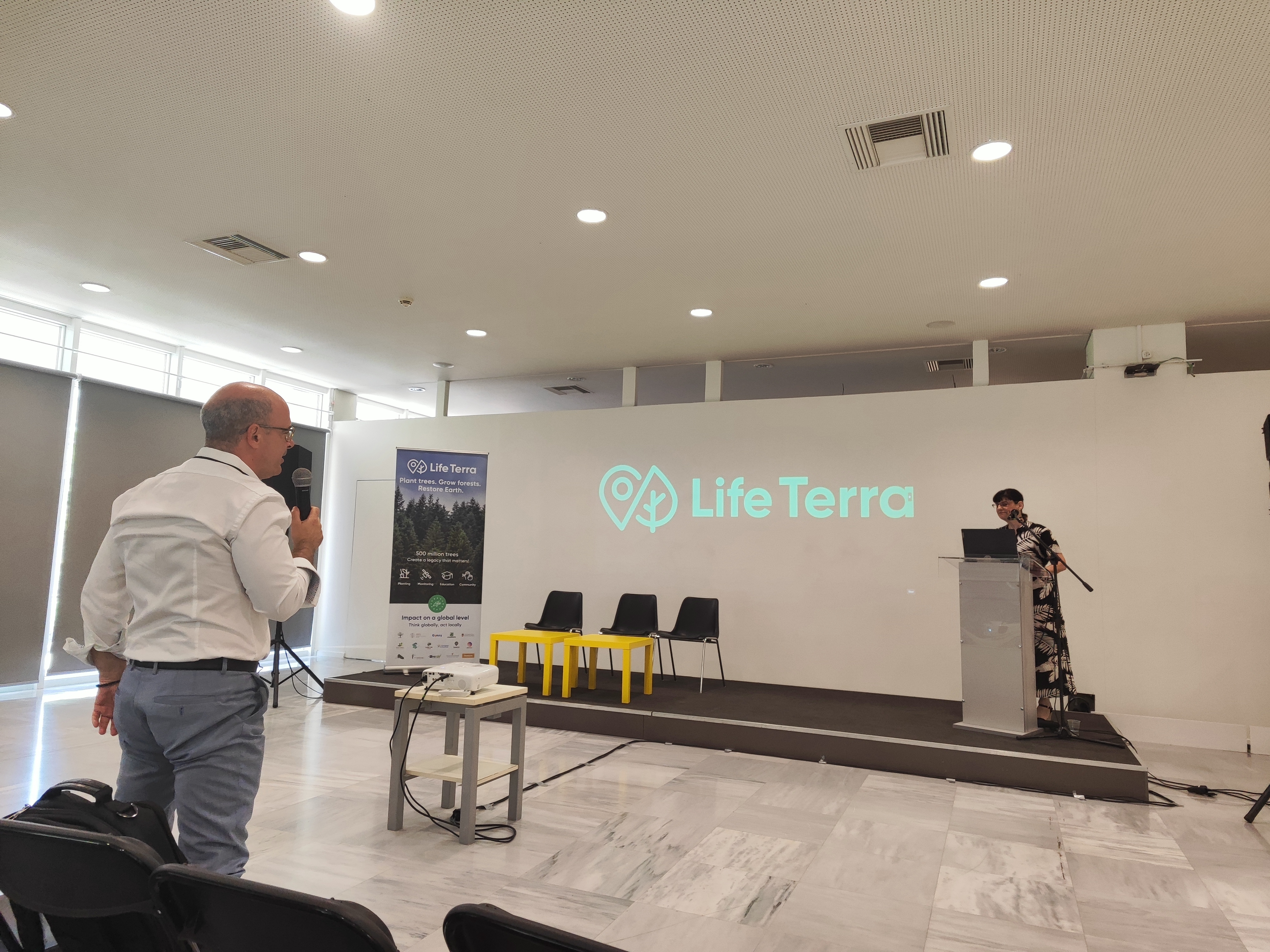
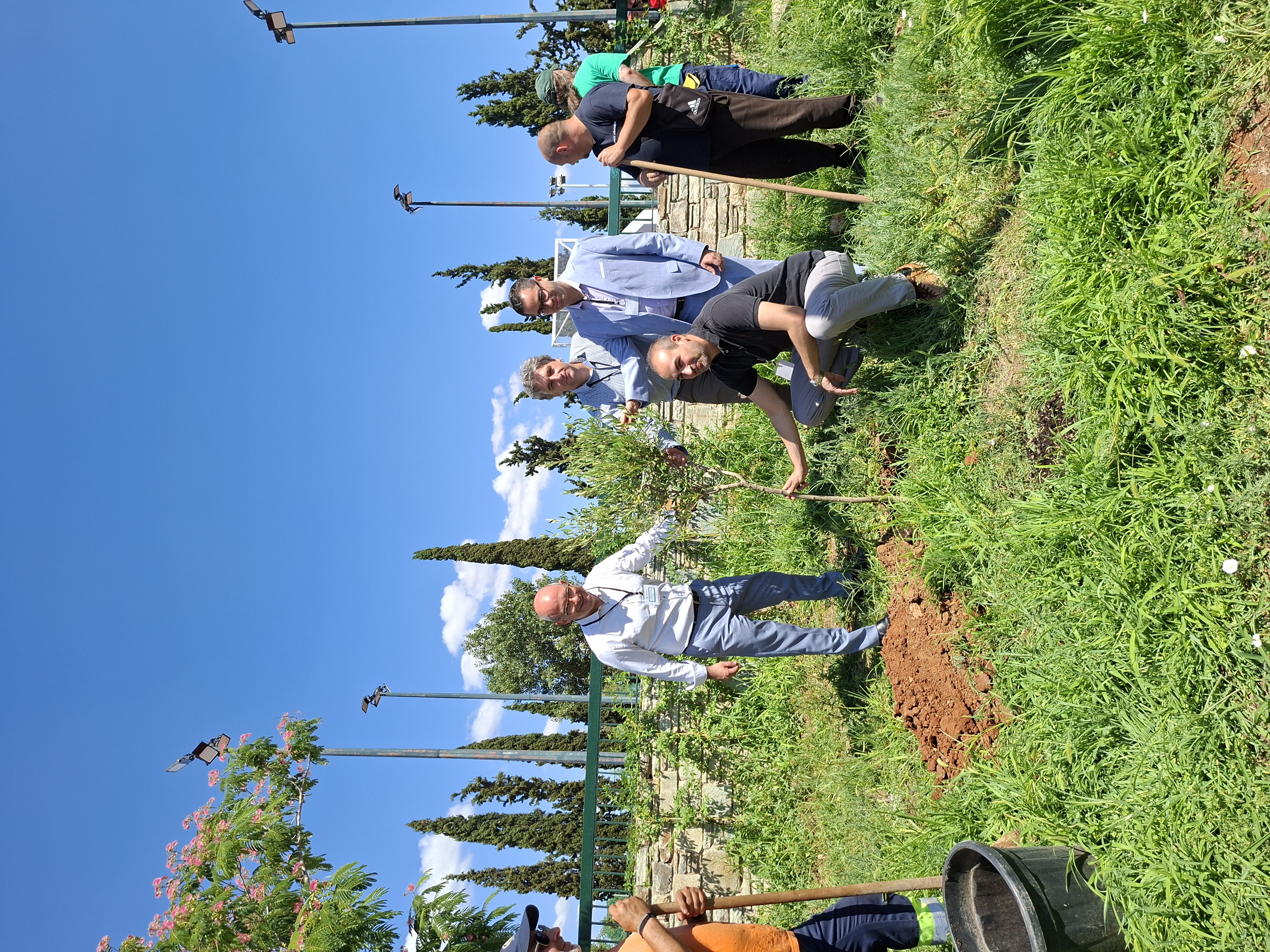
With great success and strong participation, the conference titled “Ecosystem Restoration: The Power of Forests in Carbon Sequestration” was held on June 30, 2025, at the Serafio City of Athens Sports and Cultural Center, within the framework of the European program Life Terra. The event was organised by Centre for Research and Technology Hellas (CERTH), with the support of the Hellenic Association for Energy Economics (HAEE).
The conference highlighted the crucial role of forest ecosystems and green practices in addressing the climate crisis and enhancing carbon sequestration, bringing together representatives from the scientific community, public administration, and local government.
The event was welcomed by:
Mr. Efstathios Stathopoulos, Secretary General of Forests at the Ministry of Environment and Energy,
Mr. Georgios Apostolopoulos, Deputy Mayor for Environment and Greenery of the Municipality of Athens,
Representatives of local government and partners of the Hymettus Protection and Development Association (SPAY), including Ms. Stella Katsifa, special advisor to the President of SPAY,
Dr. Panagiotis Grammelis, Director of Research at the Chemical Process and Energy Resources Institute of CERTH (CPERI/CERTH).
The conference program was structured around two main thematic sessions:
Restoring our ecosystems – Challenges & Opportunities
Carbon Farming
The event began with an introductory address by Dr. Dimitrios Kourkoumpas, who presented the purpose and structure of the workshop, introducing the audience to the content of the thematic sessions.
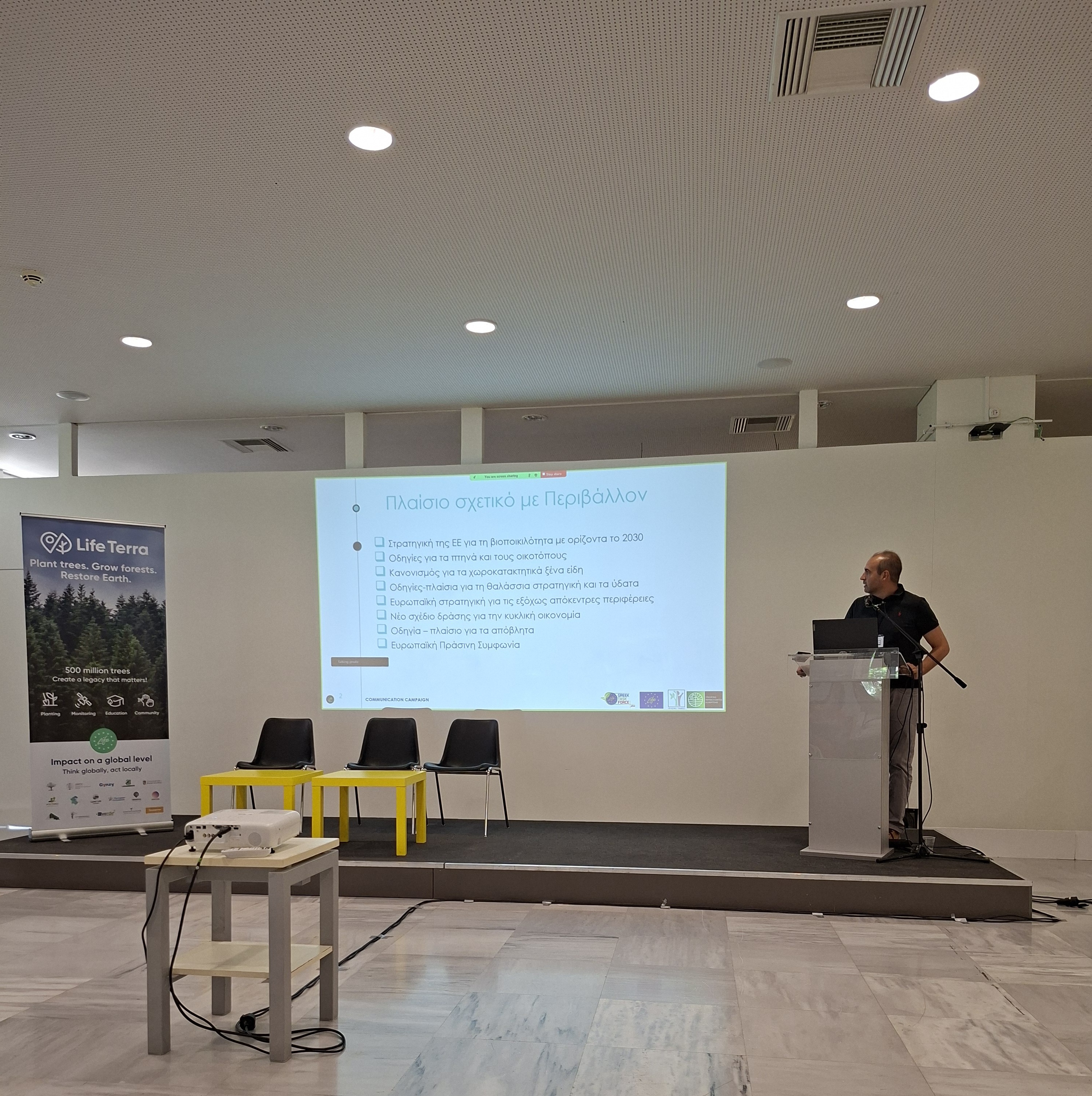
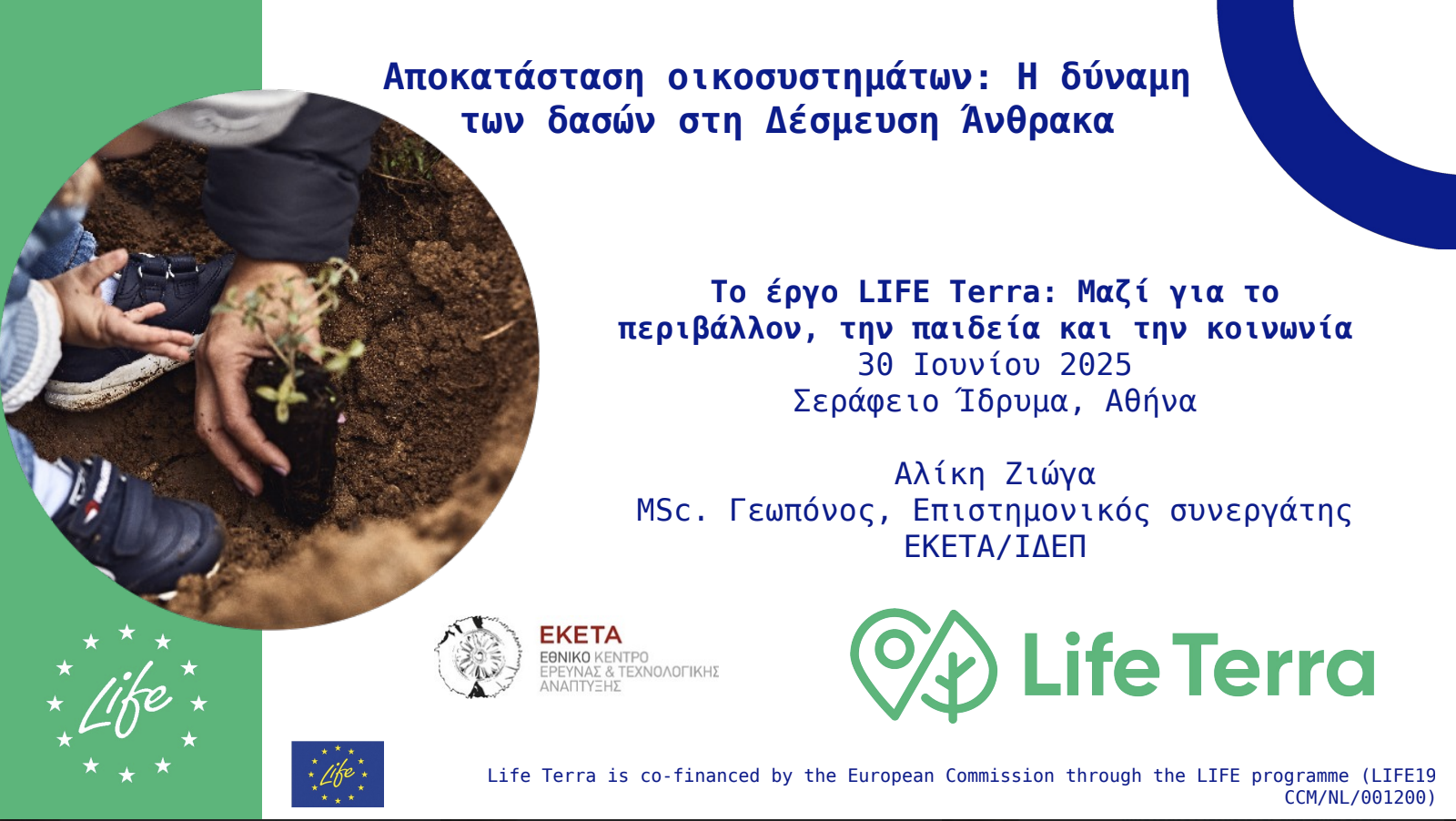
In the first session, Mr. Dimitris Banousis analysed the potential of European funding instruments, such as the LIFE programme and the Green Fund, in supporting environmental and climate actions. Mrs. Ariadni Sokratidou shared the experience of the Public Power Corporation (PPC) regarding the post-lignite transition and the restoration of biodiversity at the Amyntaio Mine. Mrs. Aliki Zioga presented the objectives, outcomes, and socio-educational dimensions of the LIFE Terra project. Mr. Michalis Gerasimos Koutsiaras showcased best practices in landscape restoration and the promotion of green, sustainable cities through European programs.
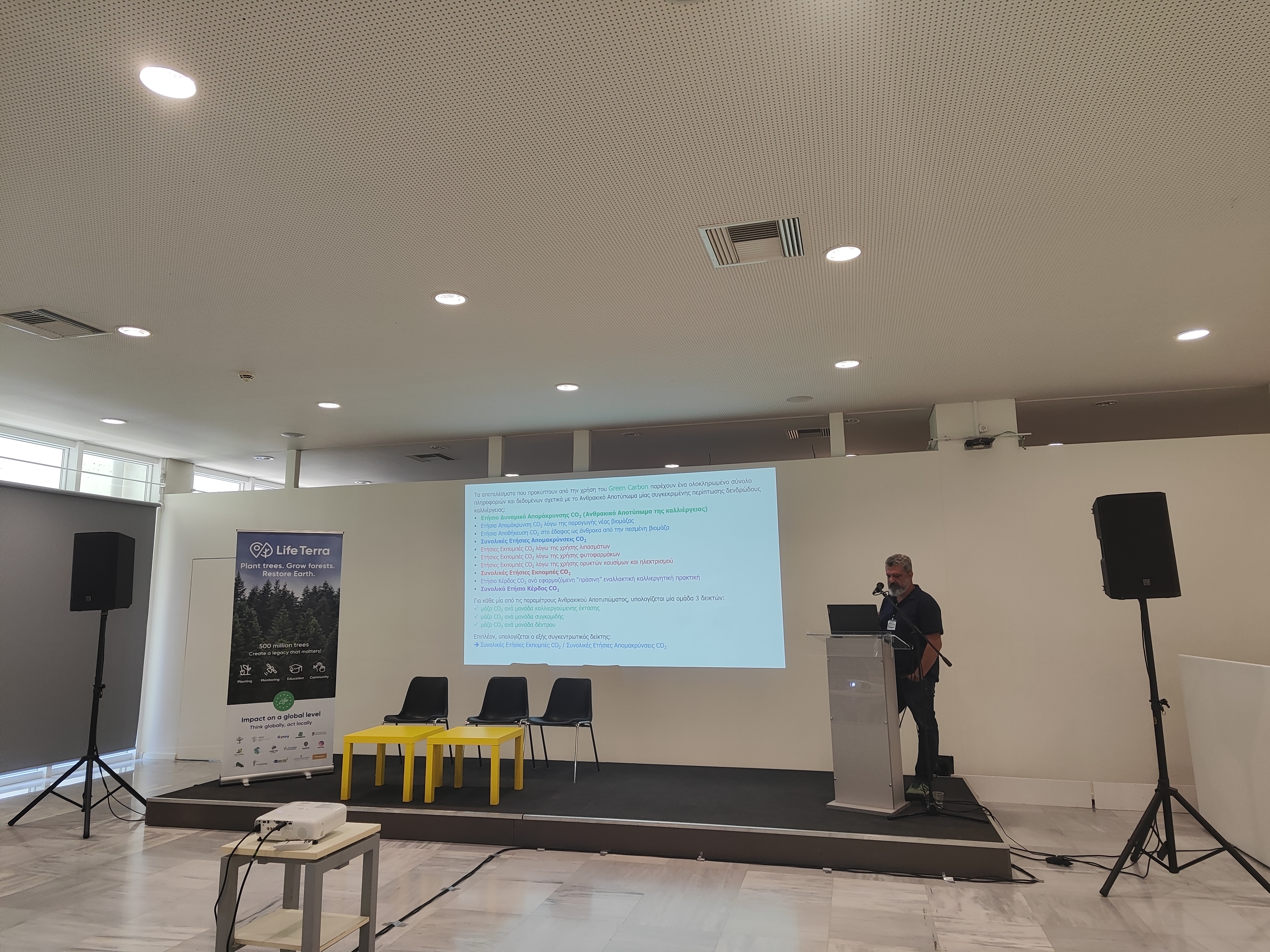
In the second session, Mr. Elias Demian examined the economic impacts of climate change on the agricultural sector. Mr. Dimitrios Tsimplinas presented the Model Forest of Western Macedonia as an example of sustainable management and restoration. Mr. Georgios Dimitriadis focused on the need to integrate the LIFE Terra project into the European carbon sequestration certification framework. Mr. Ioannis Spanos highlighted the role of woody crops in mitigating climate change, emphasizing the potential of agroforestry practices.
The workshop concluded with a closing statement by Dr. Kourkoumpas, who emphasized the importance of interdisciplinary collaboration, political support, and active societal participation in the successful restoration of ecosystems and carbon sequestration as key tools for addressing the climate crisis.
Find the presentation here.