
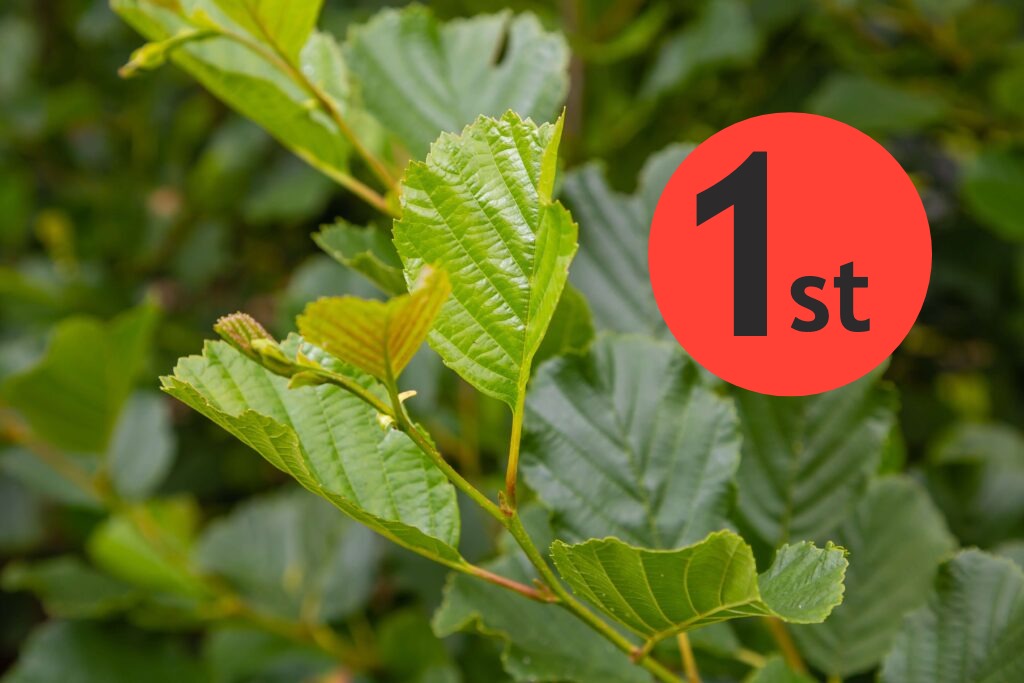
Meet the most planted tree of the season: Alnus glutinosa
If you've planted with Life Terra this season, there's a good chance you've put one of these in the ground. Alnus glutinosa, known as the common alder or black alder, came out on top across our European planting sites in 2025-2026. It's not a flashy choice, and that's part of the point. This is a tree that does its job quietly and well.
Where it comes from, and where it thrives
The black alder is native to almost all of Europe. You'll find it growing naturally along riverbanks, in floodplains, and around the edges of ponds and marshes, anywhere the soil stays damp for most of the year. It's one of the few trees that genuinely likes wet feet. Where other species struggle in waterlogged ground, alder settles in without complaint.
This makes it a natural fit for wetland restoration and floodplain forests, but its range goes further. It holds up in cropland margins and agroforestry strips, works as part of green infrastructure in settlements and urban forests, and even fits into mixed vegetation areas where the soil is heavier or poorly drained. It's less suited to dry grassland, but in wetter meadow zones it does fine. Gardens with damp corners benefit from it too, especially as an early companion in food forest layouts.
What makes it useful, not just present
The standout feature of alder is its relationship with a soil bacterium called Frankia. The tree forms nodules on its roots where this bacterium lives, and together they pull nitrogen straight from the air and convert it into a form the soil can use. This is the same basic trick legumes do, but alder is one of the only trees that does it. Plant it next to nitrogen-hungry species or degraded farmland soil, and it works as a slow, steady fertilizer with no input required.
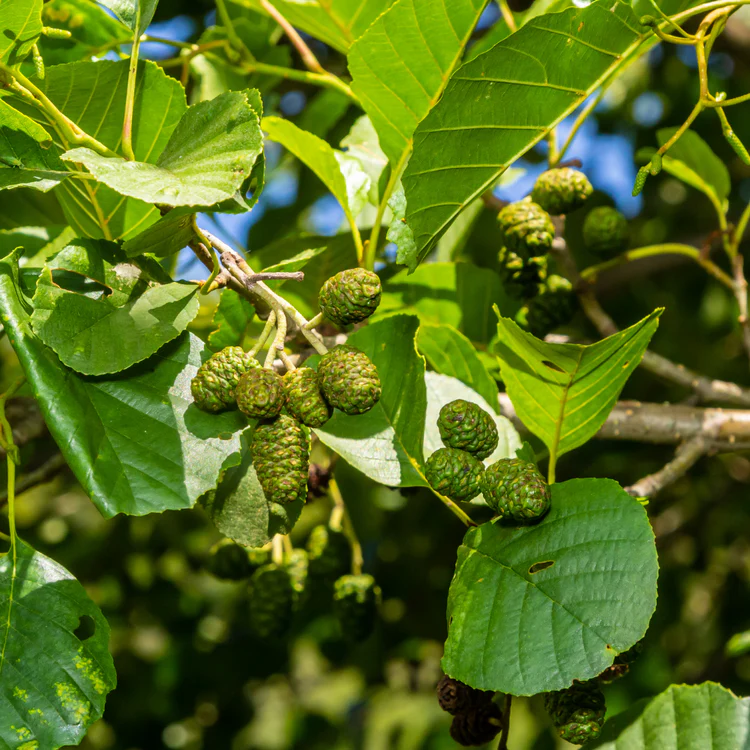
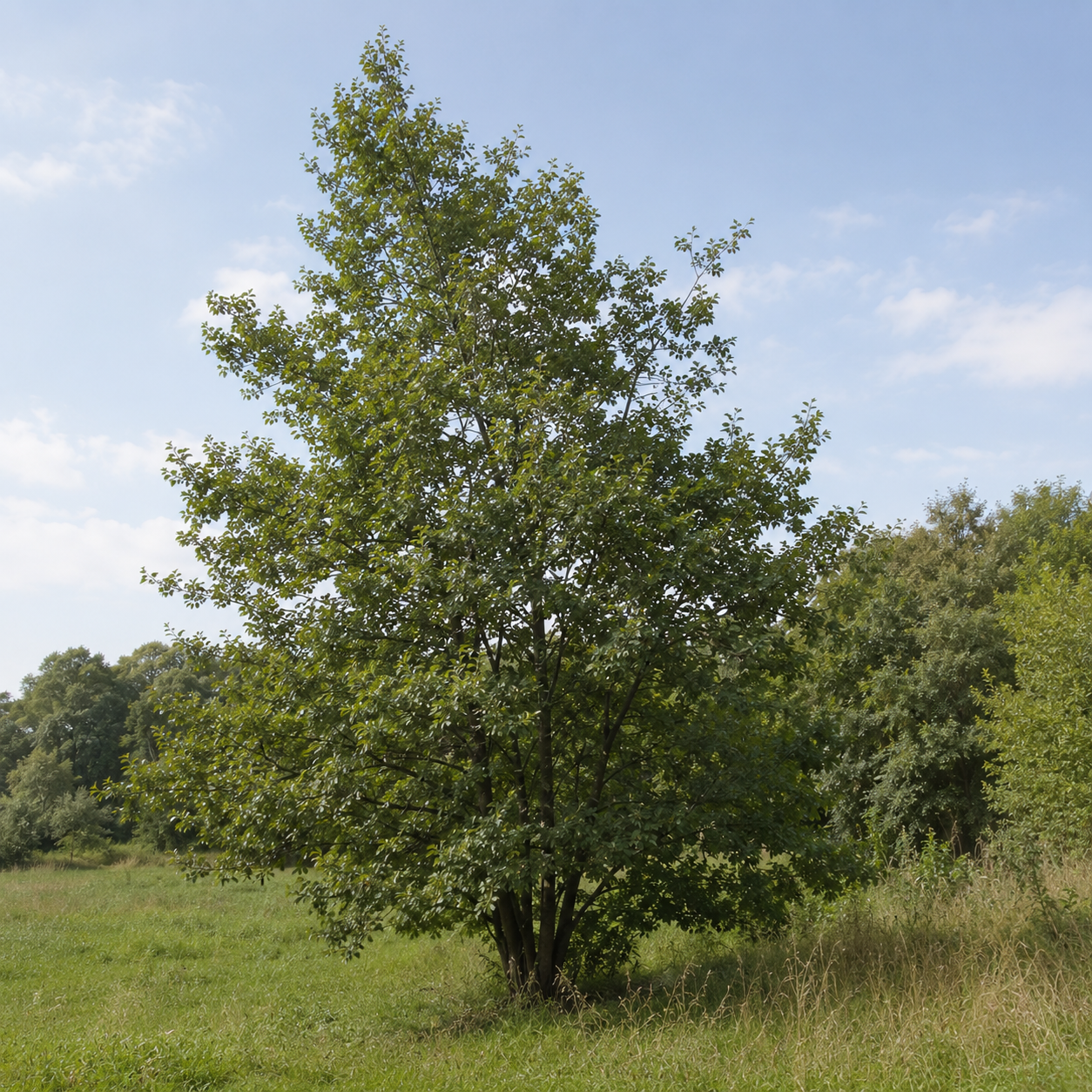
It's also fast-growing for a tree with this kind of ecological value, often reaching 15 to 25 metres at maturity, occasionally more. Its root system is dense and fibrous, which makes it genuinely good at holding riverbanks and slopes together and slowing erosion. Its catkins open in late winter, before almost anything else is flowering, giving early pollinators something to work with when food is otherwise scarce.
Life span and limits
Alder isn't a long-lived tree by forest standards. Sixty to a hundred years is typical, with some individuals reaching further in good conditions. It's a pioneer species, quick to establish, quick to improve the ground around it, and often replaced over time by slower, longer-lived trees once the soil and microclimate have improved. That's not a weakness. It's the role it's built for.
It's worth being upfront about one issue: alder populations across Europe have been dealing with Phytophthora alni, a root disease that has caused dieback in various river systems over the past few decades. It's a real risk in restoration planning, particularly in wetland and riverside projects, and it's part of why site selection and monitoring matter as much as the planting itself.
Why it topped the list this season
None of this is about Alder being a perfect or symbolic tree. It's a practical one. It fixes nitrogen without being asked to, holds ground that would otherwise wash away, grows fast enough to show results within a planting cycle, and tolerates the kind of damp, difficult terrain that often gets left out of restoration plans because nothing else will grow there. That combination is why it ended up planted more than any other species across our sites this season, from cropland edges to wetland cores to the rougher patches of urban green space that don't get much attention otherwise.
It's a tree that earns its place by being useful where it stands, not by looking good in a photo.