
As the climate crisis accelerates and the EU pushes toward its 2050 net-zero target, a critical gap is emerging in the continent’s climate policy: the absence of a robust and integrated framework for carbon removals, particularly nature-based solutions (NbS) like reforestation, afforestation, and soil carbon sequestration.
While the EU has made significant steps with the Carbon Removal Certification Framework (CRCF) and the broader Fit for 55 package, these initiatives remain in development. Key market and regulatory uncertainties are holding back private investment and slowing down deployment at scale.
“What we are trying to achieve is how to translate NBS into a tradable and marketable asset, understand the demand and create a marketplace for it”, said Christian Holzleitner, Head of Unit for Land Economy and Carbon Removals in DG Clima during the Life Terra’s Conference on Nature-Based Solutions for the Future: carbon removal and biodiversity credits.
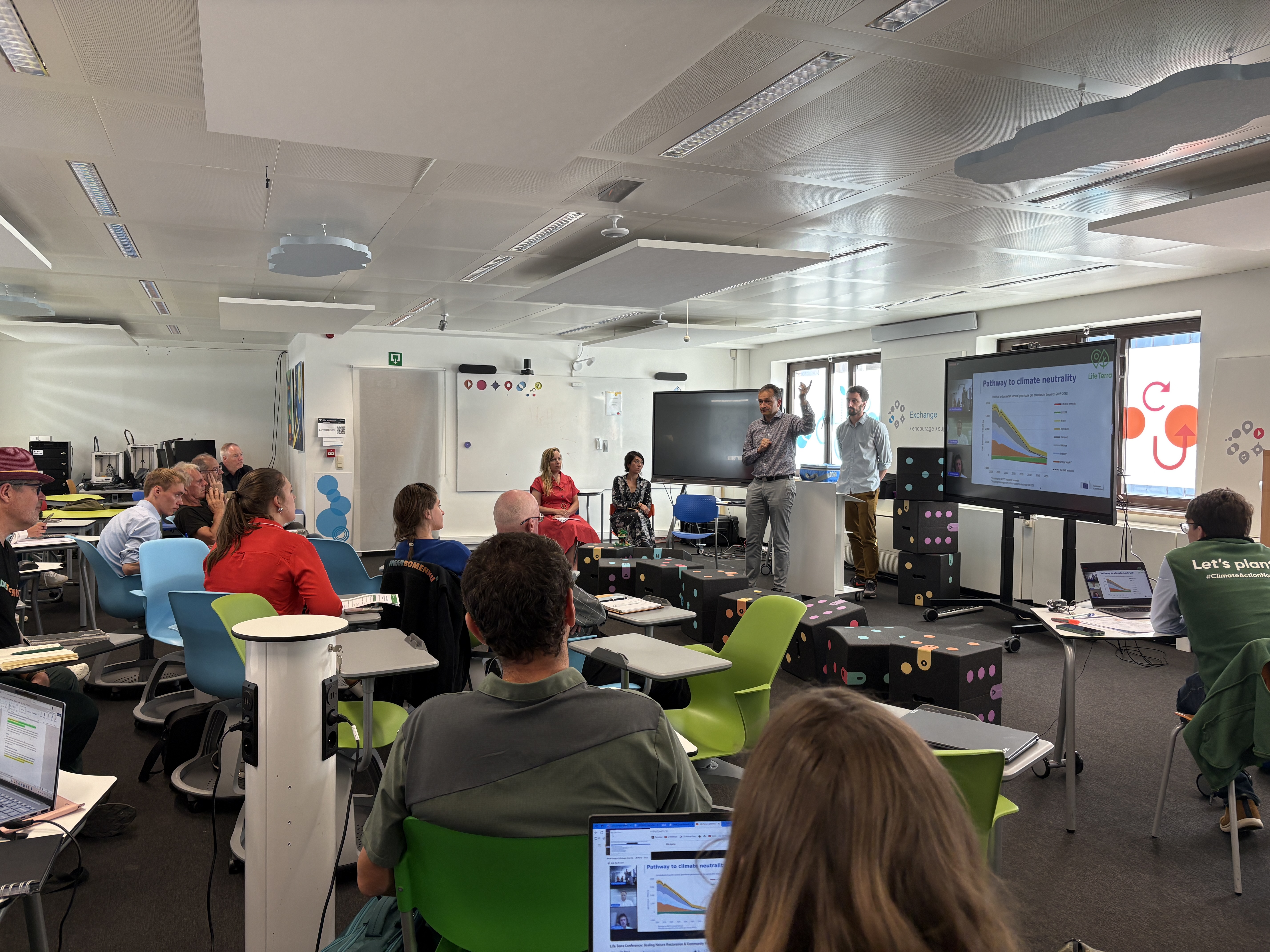
Christian Holzleitner at the conference.
Yet today, there is no clear mechanism connecting high-quality removal credits with the EU Emissions Trading System (ETS) or voluntary carbon markets. This gap affects investor confidence, limits private sector participation, and delays meaningful action.
Uncertainty affecting investment
The lack of clarity on which projects will be eligible under the CRCF is deterring private sector commitments, particularly from large corporates who need clear rules to engage meaningfully in nature-based carbon markets and it is also affecting developers who are struggling to turn client interest into viable, financed projects.
“The uncertainty of what projects will be accepted or recognised by the CRCF makes big corporations reluctant to commit fully. We think that when clear guidance comes in, we will see a growth in the demand for these products”, stated Tom Rutten, Head of Voluntary Markets at Caely Renewables.
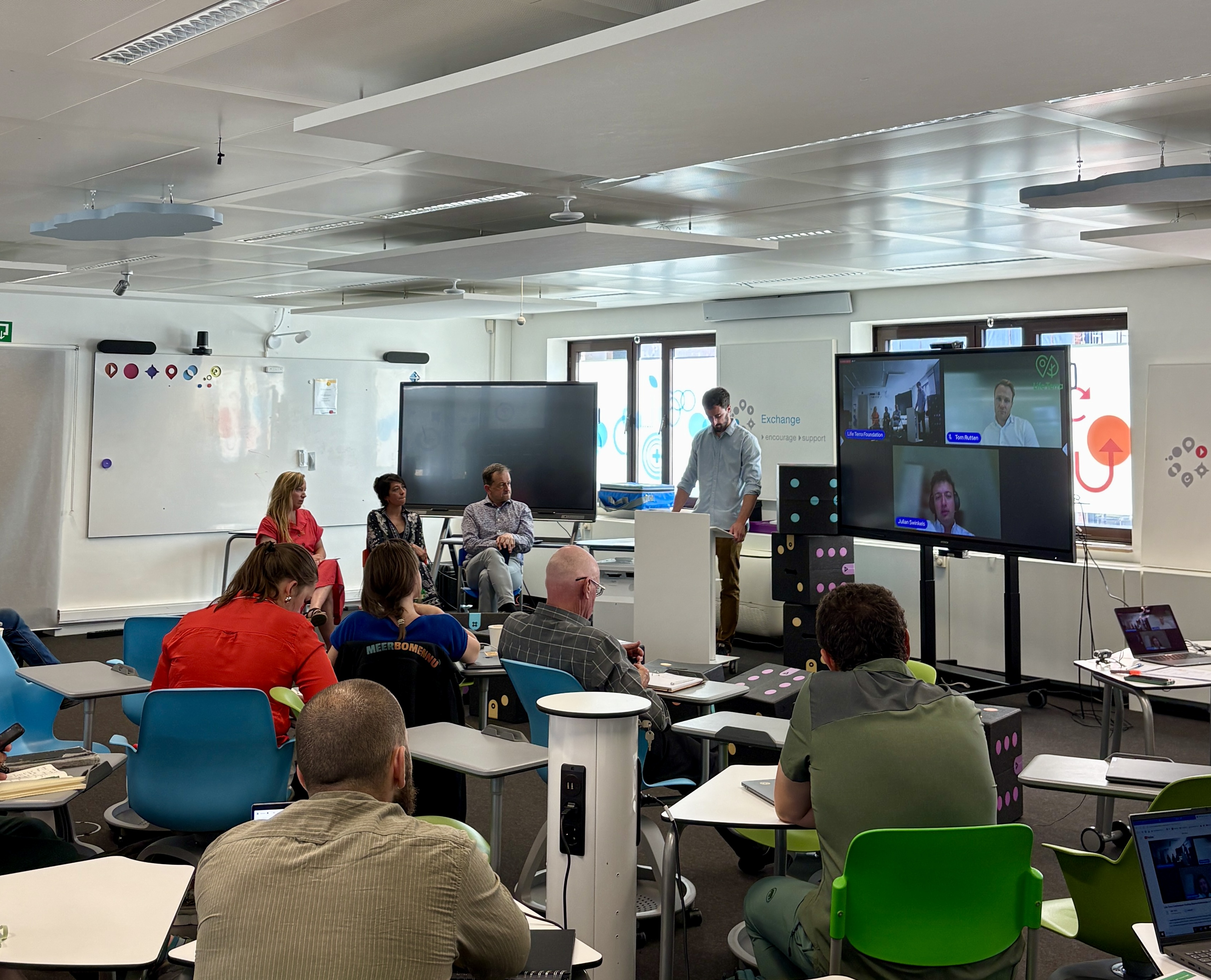
Tom Rutten and Julian Swinkels participating online at the conference.
“To really turn the high demand of interest we receive from large clients into real project demand, we would need more clarity on the claims”, said Anna Roesinger, Project Development NBS Europe at ClimatePartner.
Proximity as a valuable asset
More and more companies are looking to offset their emissions locally, reinforcing the demand for credible European nature-based solutions, not only on carbon removals, but also on other key ecosystem services such as biodiversity, water retention and soil. This growing interest, however, must be met with financial tools and supportive policies that allow projects to scale up rapidly.
“When offsetting, at Waterland, we look to do it close to home, close to our operations. Being able to do that in Spain, where we have an office, was a key aspect for us. And also the additional benefits: biodiversity, soil health; as we believe the biodiversity crisis and climate crisis go hand in hand”, mentioned Julian Swinkels, ESG at Waterland Private Equity.
“For European projects, 80% of the total cost of the reforestation projects is related to early investments. This doesn’t make it easy for European players to scale fast. I think there’s an opportunity for investors to step in as the demand is clearly there”, stated Kathleen Ceulemans, Head of EMEA Growth at Land Life Company.
Without clear guidance, Europe risks falling behind in the global carbon removal race, missing the opportunity to lead on credible, high-integrity climate solutions that also restore nature and engage citizens.
Find the recording of the conference here.