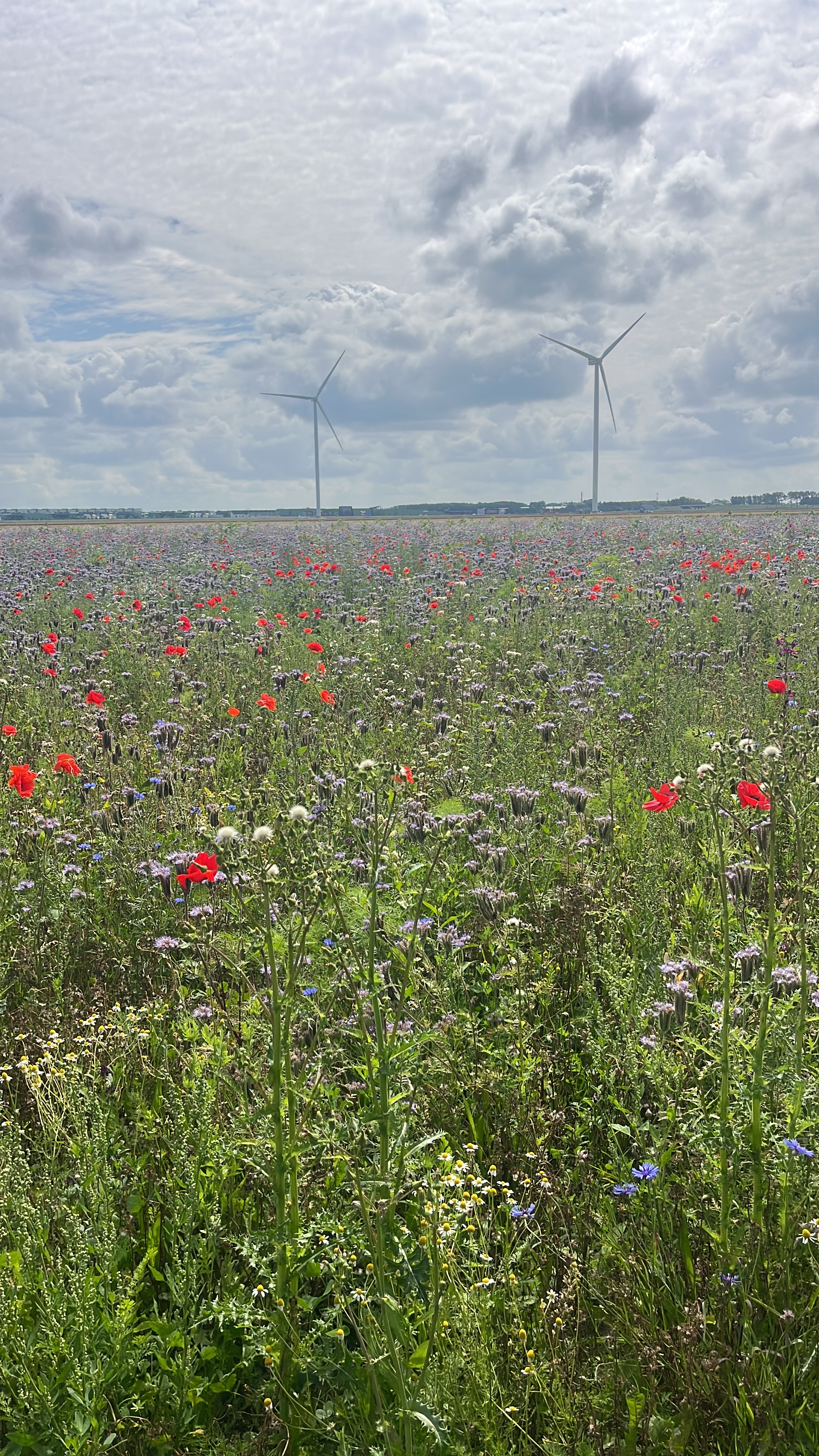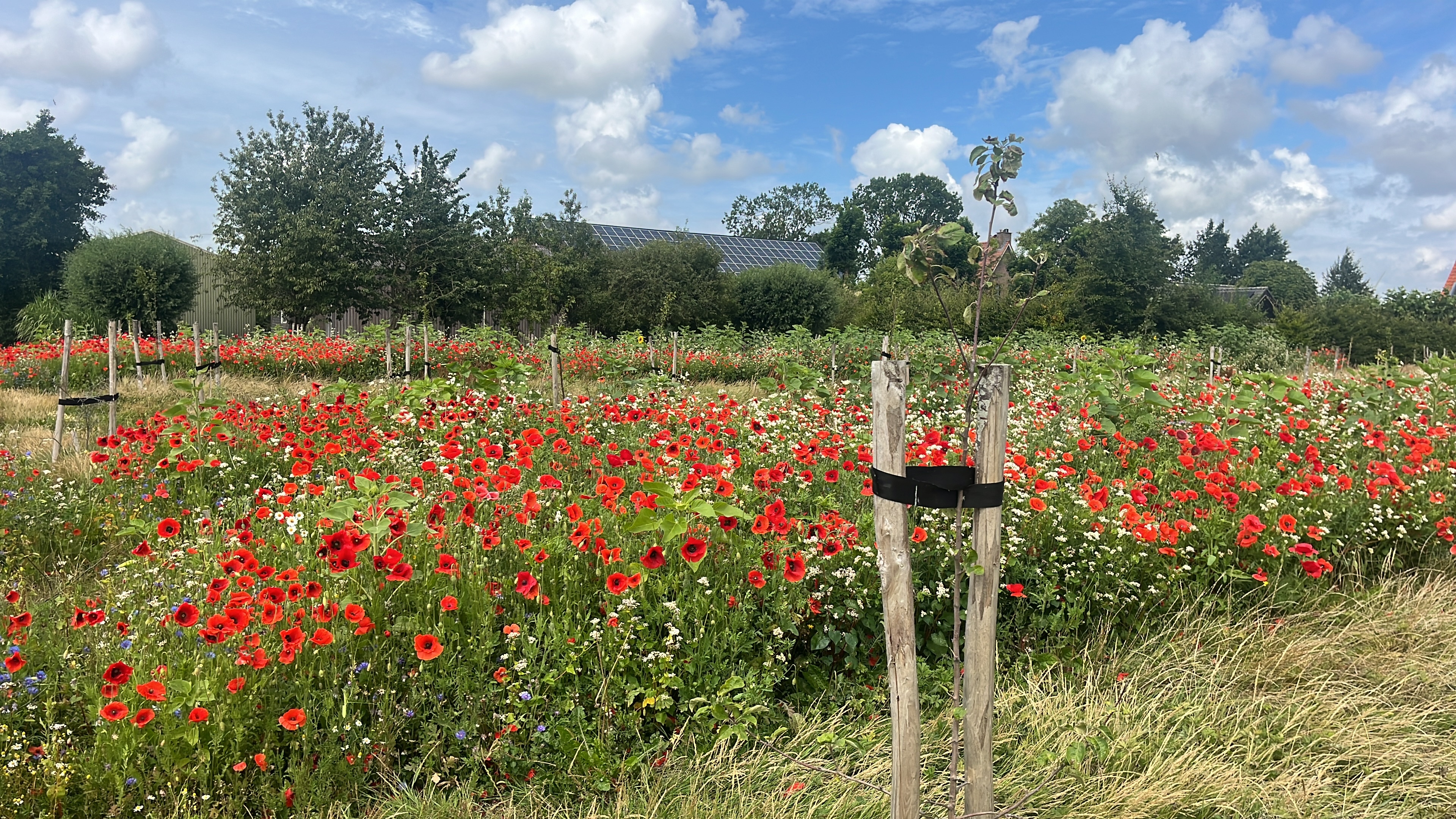
This July, we headed north to the Netherlands to see how some of our recent planting projects were getting on. These weren’t just any sites, they included an agroforestry project from the 2023/24 planting season and two food forests planted earlier this year.
Right away, the numbers impressed us: over 95% of the trees were alive and thriving. Agroforestry systems usually show good survival rates, but given the hot, dry spring, these results were even better than expected.
Our first stop was an organic farm where the young trees were framed by a field of wildflowers alive with bees, butterflies, and other pollinators. It felt like the perfect example of how tree planting can work hand in hand with biodiversity.
The second site, a reforestation project, was a little less picturesque, tucked between a dyke and a forest, but the trees there were also doing well. Wildflowers (some less showy than at the first site) carpeted the ground, and there were plenty of dragonflies, butterflies, and signs of mice making themselves at home.
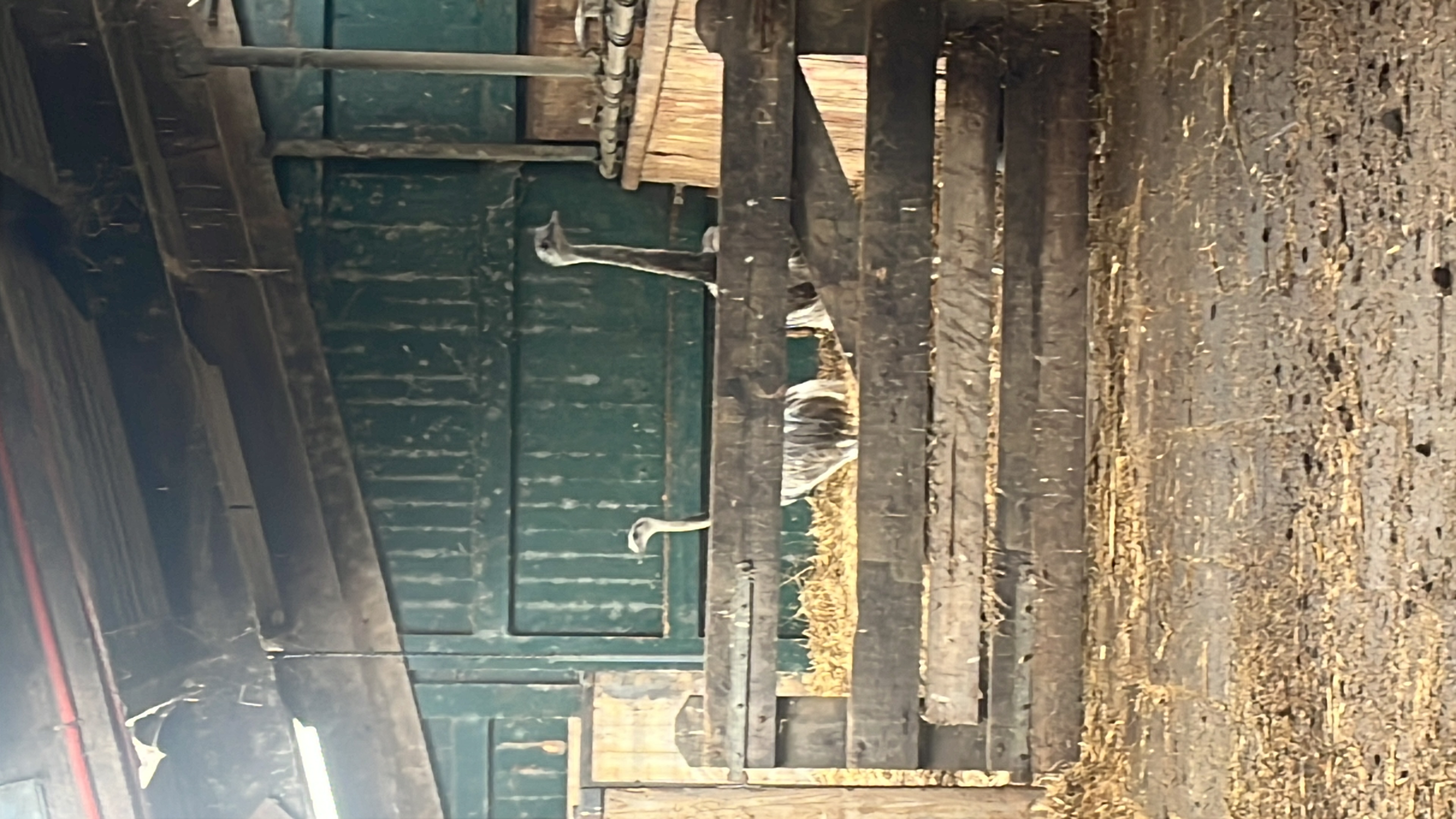
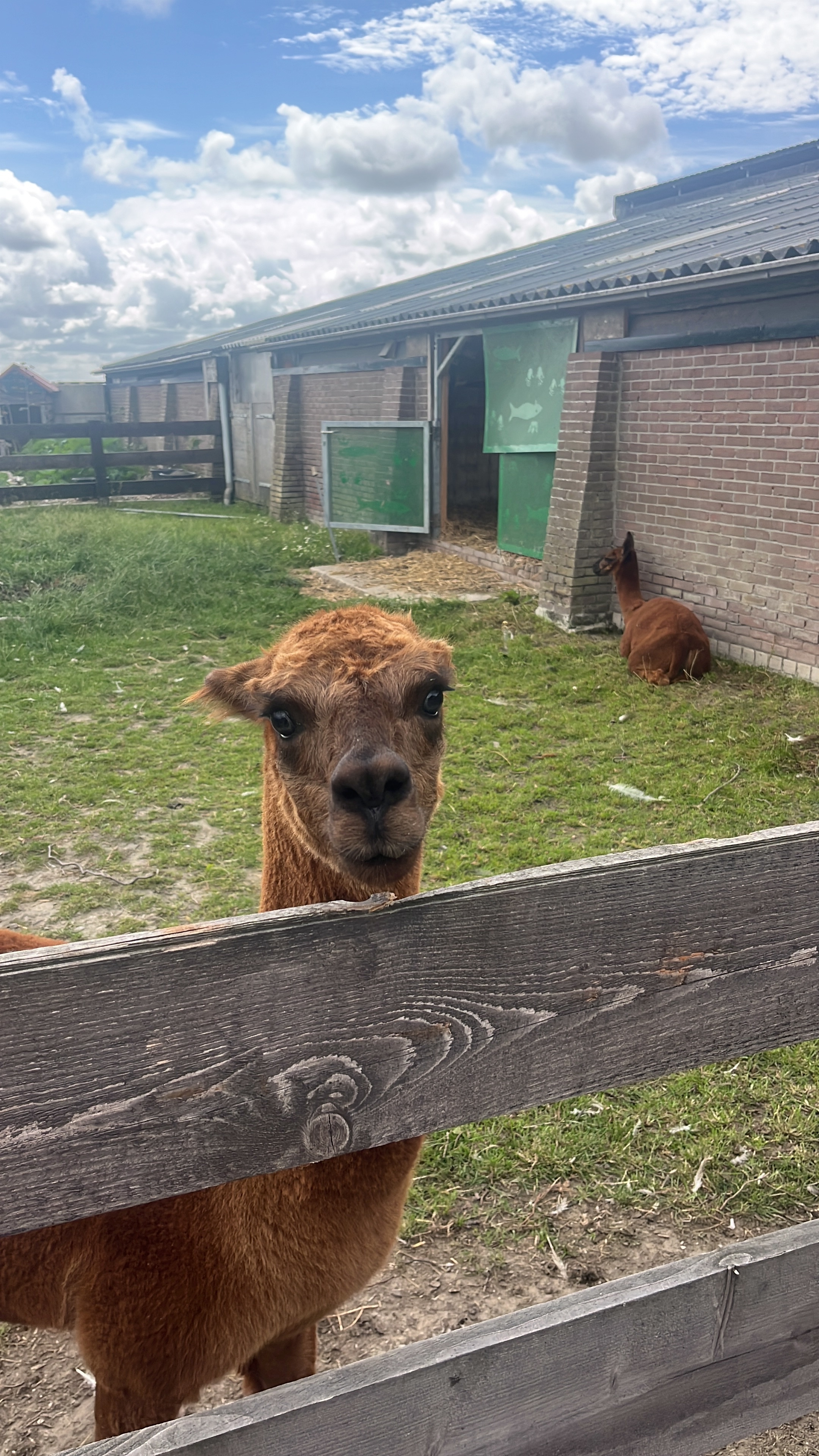
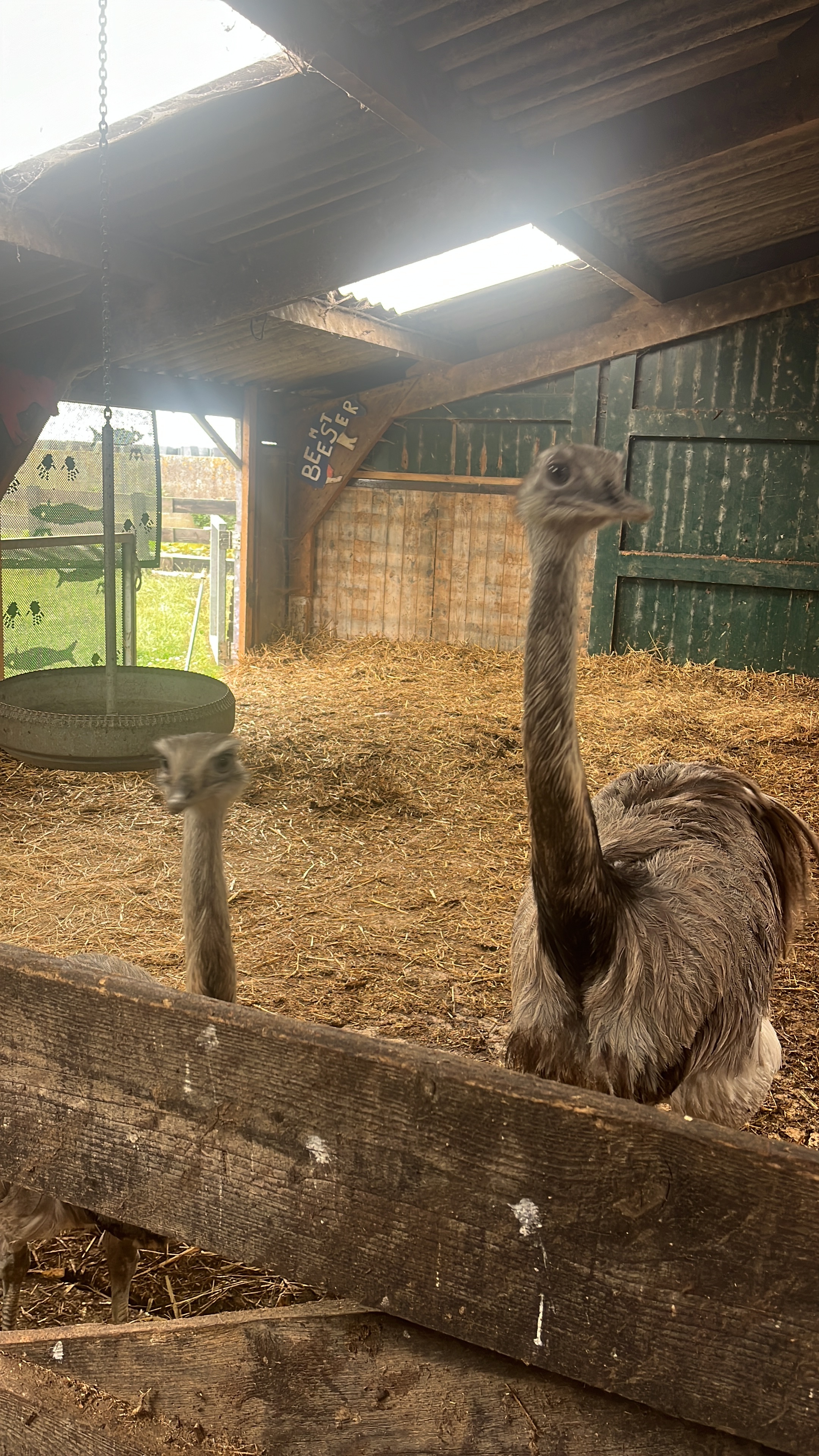
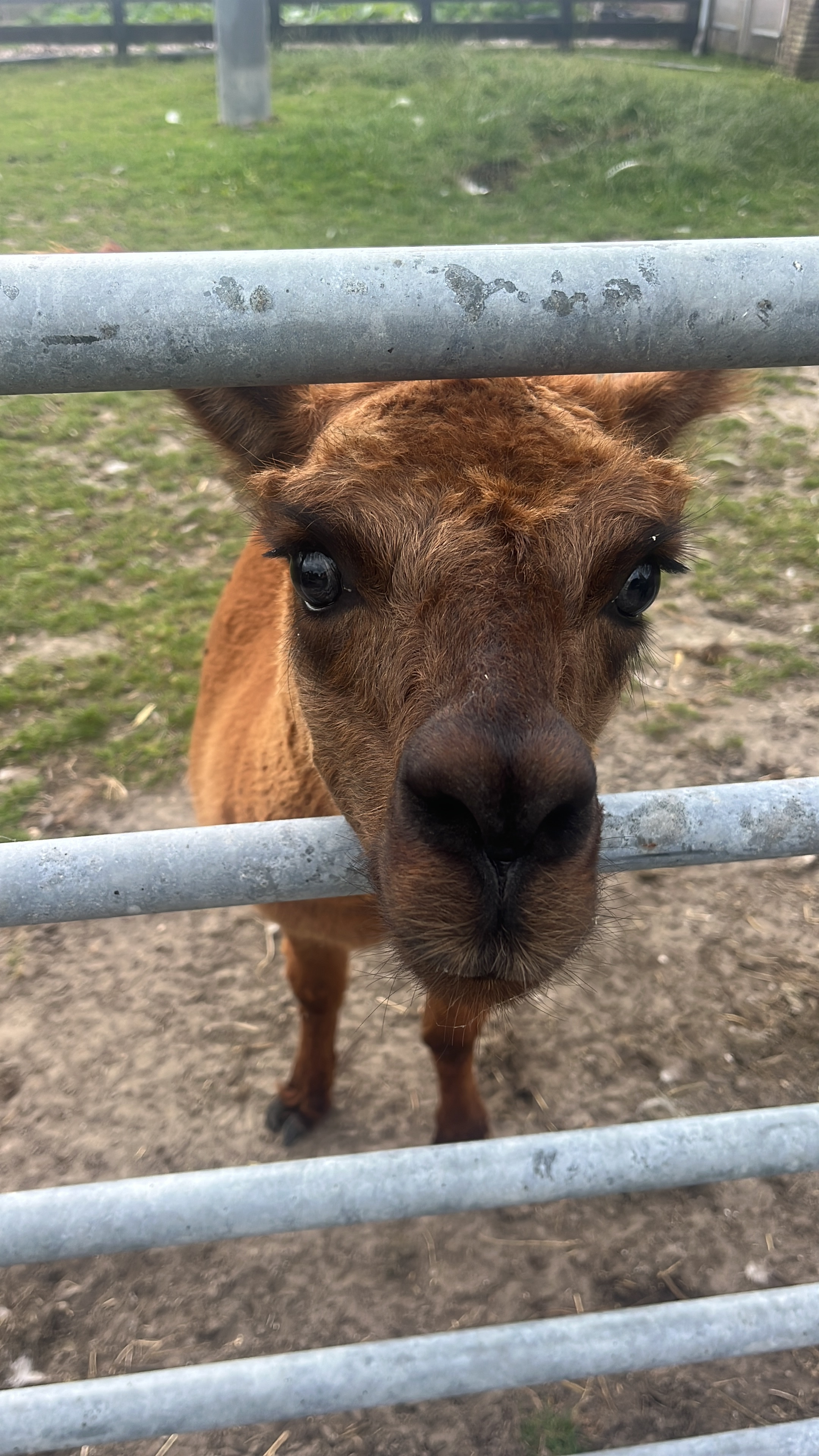
The last site turned out to be our favourite! Another organic farm, this one had orchards laid out with precision, fruit bushes lined neatly with stakes, and rows of trees each surrounded by a layer of woodchips. This simple step is proving its worth, acting as a shield against weeds that might otherwise compete with young trees. The result: strong, healthy growth. The farm also had a few exotic animals wandering around, which, while not exactly friendly, were definitely memorable.
Across all three sites, we saw encouraging signs, not just in the survival rates, but in the ecosystems forming around the trees. From pollinators to small mammals, the new plantings are already offering food, shelter, and space for wildlife. And for us, that’s the clearest sign that these projects are taking root in more ways than one.