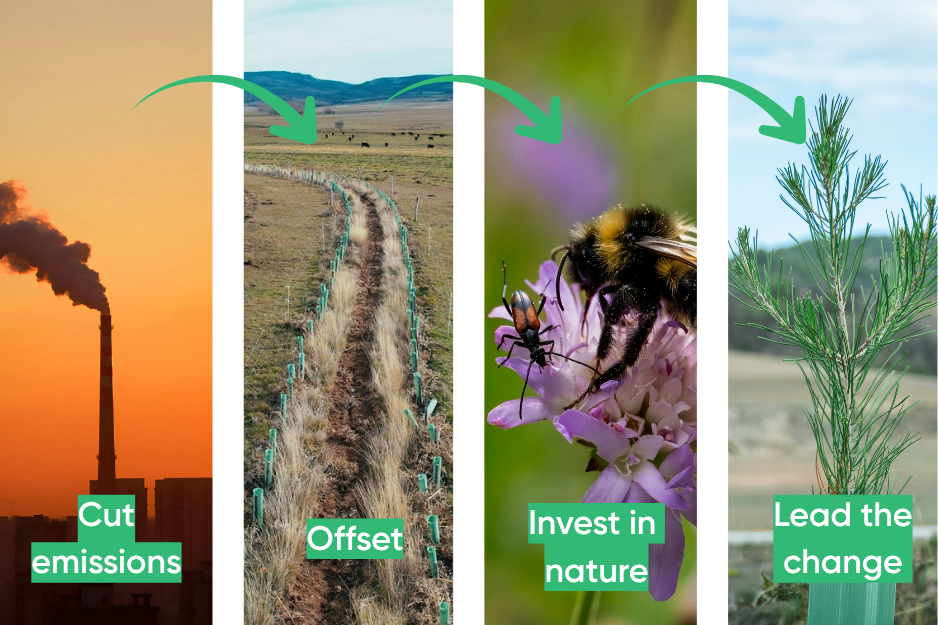
Beyond Net-Zero: How Companies Can Take Real Climate Action
In recent years, more and more companies have turned to carbon offsetting as a way to demonstrate climate responsibility. Offsetting means compensating for unavoidable emissions by financing projects that reduce or capture greenhouse gases elsewhere, for example, by planting trees or supporting renewable energy projects.
But offsetting alone is not enough. Critics argue it risks becoming a “license to pollute” if not paired with deeper changes. The real challenge (and opportunity) for businesses today is to go beyond offsetting and embed sustainability into their core strategy.
Prioritising High-Quality Nature-Based Solutions
Offsetting should never replace reducing emissions directly within operations. The first priority for businesses is to cut emissions at their root.
However, when looking to compensate for residual emissions, the quality of projects matters. Planting trees in monoculture plantations may capture carbon, but they don’t create resilient ecosystems. Instead, businesses should support nature-based solutions that deliver multiple benefits:
Biodiversity restoration by planting diverse native species.
Carbon removal through reforestation.
Community engagement involving local stakeholders in projects.
Biodiversity at the core of projects
Climate and biodiversity are two sides of the same coin. Companies that want to lead on sustainability should look beyond “net zero” and aim for nature-positive strategies. This means supporting projects that restore ecosystems, enhance biodiversity, and protect soils and water systems.
Biodiversity credits are an emerging tool for companies that want to measure and communicate their impact beyond carbon. Early adopters will gain credibility and leadership in this evolving space.
Engaging your employees and the local community
Another key step to move beyond offsetting is engaging employees and local communities in climate action, especially as an increasing number of employees value working for companies that demonstrate real commitment to ESG principles:
Organise tree planting days to create a direct link with nature.
Offer sustainability training programs.
Support local environmental projects in areas where the company operates.
This builds employee pride, strengthens company culture, and creates authentic stories to share with customers and stakeholders.
The importance of transparency
Greenwashing is one of the biggest risks to corporate climate action. Companies that want to move beyond offsetting must prioritise transparency to build trust with customers, investors, and regulators.
At Life Terra, we work with companies across Europe to turn commitments into impact. We offer multiple solutions for businesses to take local, real and tangible climate action. Explore how we can collaborate and join our network of trusted partners.